

A Buyer’s Guide for GI Labs and Endoscopy Departments Looking To Upgrade Their Esophageal Dilator Storage Solutions
Industry guidelines that specifically define proper dilator drying methods are still developing, but many GI labs and endoscopy departments have already begun applying the same logic to dilators that are used for reprocessing flexible endoscopes such as vertical hanging or using HEPA-filtered positive pressure airflow. When dilators also contain internal channels, gravity-assisted vertical hanging and controlled airflow simply make more practical sense than horizontal storage methods. That shift is exactly why Harloff has developed its own unique line of vertical dilator storage and drying carts, designed to store most dilators used within today’s medical field including Savary-Gilliard®, Maloney and Bougie dilators.
The challenge is that not every facility needs the same type of cart. Some GI departments need HEPA-filtered positive pressure airflow and large inventory capacity, while others simply want better storage organization in a smaller footprint without the need for powered drying. Choosing the right model depends less on specifications alone and more on how your department actually functions day-to-day.
Why Vertical Dilator Storage Matters
Clinical teams consistently mention the same pain points when discussing traditional horizontal storage for their dilators:
- Difficulty organizing multiple dilator sizes
- Slower gravity drainage for channel-containing dilators
- Crowded procedure room shelving
- Increased handling while searching for inventory
- Poor visibility of what dilators are clean, dry and available
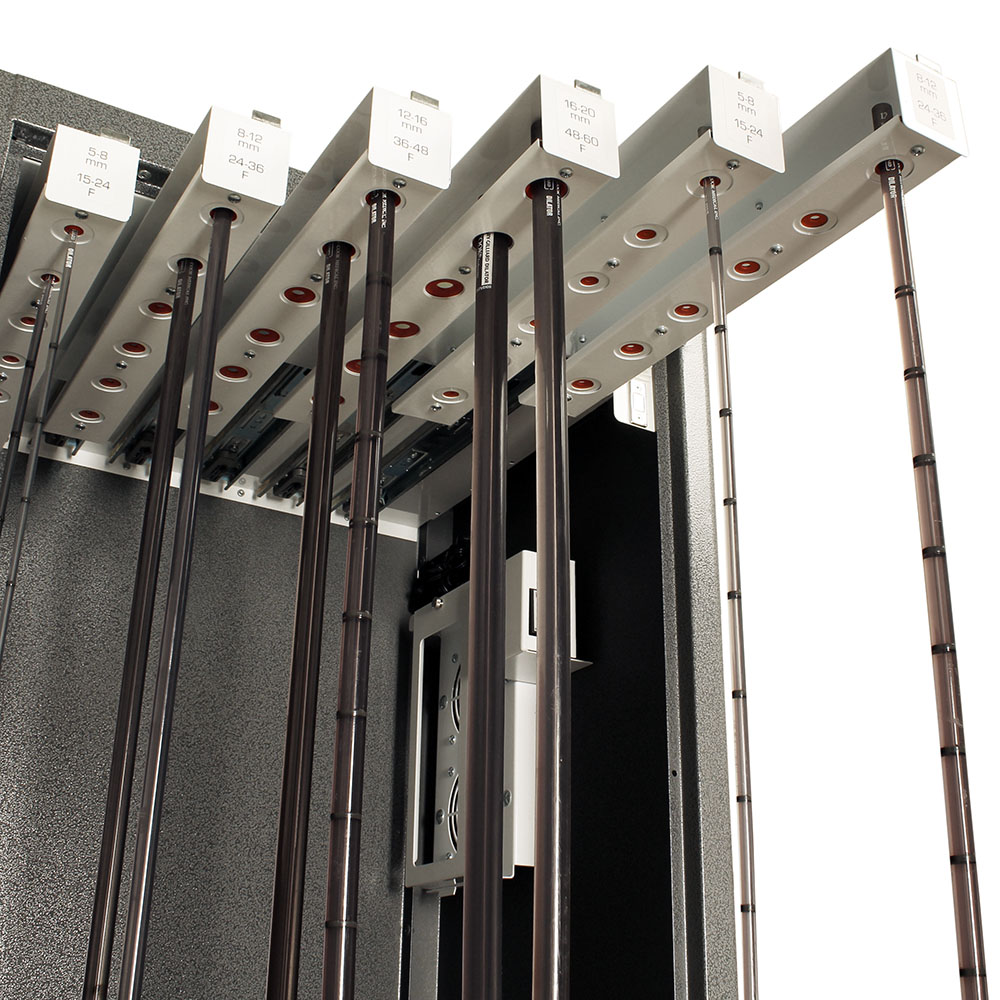
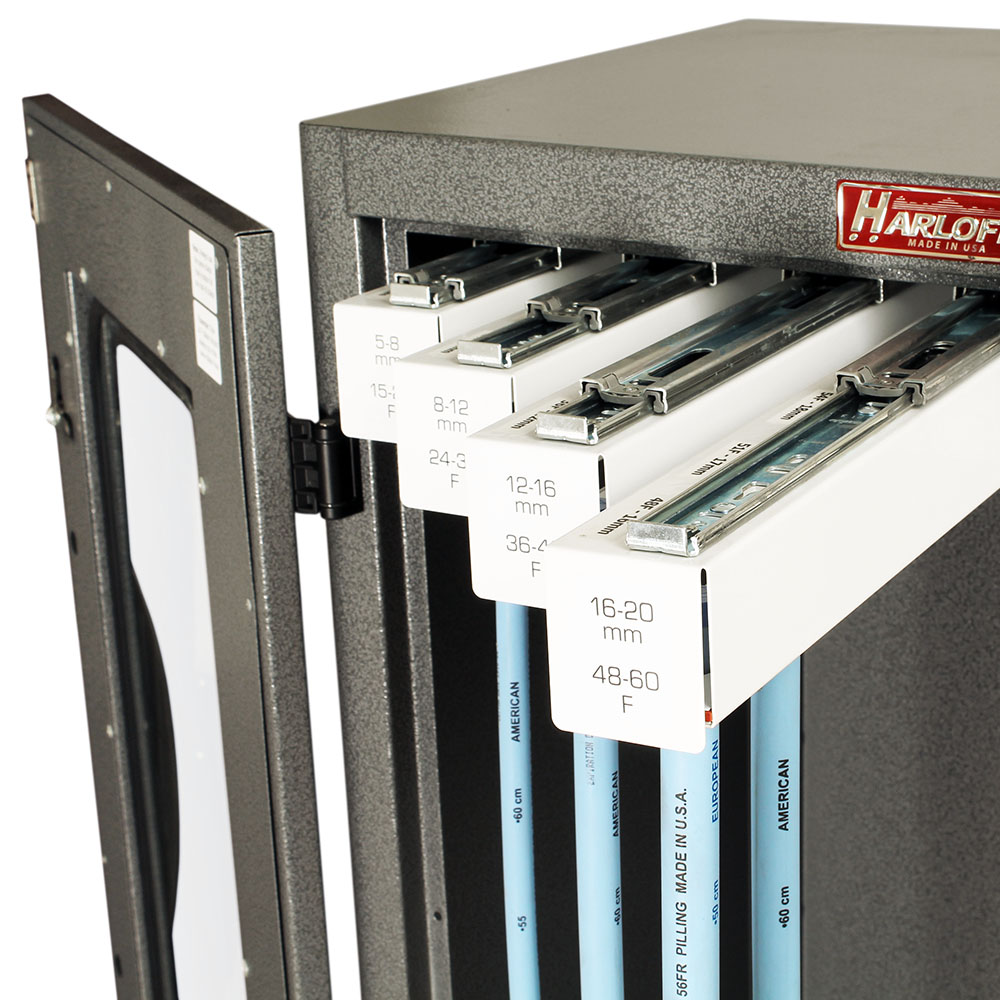
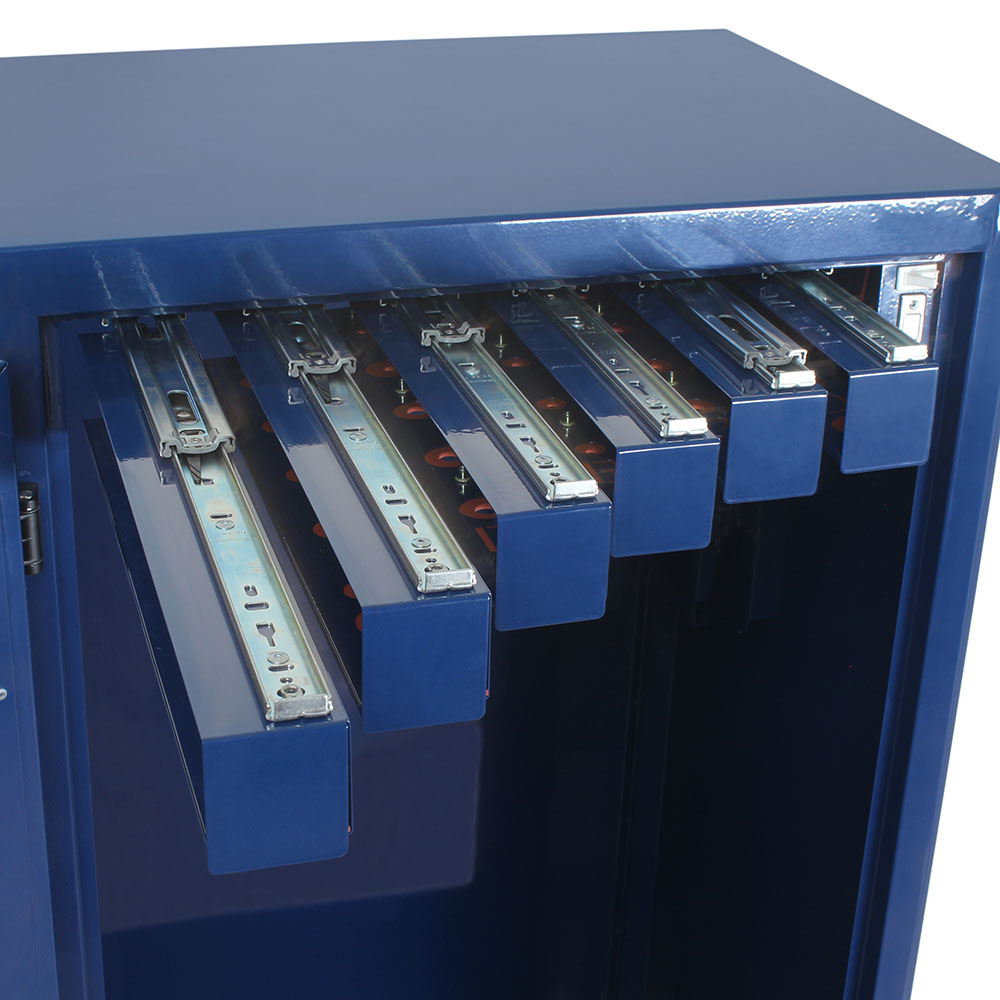
Harloff dilator carts address these workflow issues by storing dilators vertically on pull-out slides featuring soft-grip membranes that can be customized to any facility’s actual dilator inventory. Each slide can accommodate dilators ranging anywhere from 5mm (15 French) to 20mm (60 French), allowing departments to configure storage around the sizes they actually use instead of relying on generic holders that aren’t designed for their specific dilator inventory.
Facilities using drying-package models also gain positive pressure HEPA-filtered airflow technology similar to what’s used in modern vertical endoscope drying cabinets. These systems actively circulate filtered air through the cabinet while supporting vertical drainage for both standard and wire-guided dilators.
Drying vs. Non-Drying Models: Which One Makes Sense?
One of the most common buying questions we see GI staff members pondering is whether their facility truly needs active HEPA-filtered airflow for their dilators or not. The answer depends entirely on a facility’s workflow.
Drying Package Models
Harloff “DP” Dilator Cart models include:
- Positive pressure drying system
- Replaceable HEPA filtration removing 99.7% of particulates down to 0.3 microns
- Adjustable fan runtime from 10–180 minutes
- Medical-grade electrical system
- Automatic airflow activation when the cabinet closes
These models are often selected by facilities moving toward more formalized drying protocols or departments already applying vertical endoscope drying principles to their dilators.
Clinical teams frequently say things like: “We wanted to implement the same drying philosophy that we currently use for our scopes.”
Drying package models are particularly valuable for wire-guided dilators and channel-containing devices where airflow and vertical drainage help support more consistent drying practices.
Non-Drying Storage Models
Non-drying Harloff Dilator Cart models maintain the same vertical hanging design and organizational benefits as drying models, but without powered airflow.
Facilities often choose these models because:
- They already separately air drying dilators
- Their facility’s workflow only requires gravity drying
- They want fewer electrical components and simpler maintenance
- They focus on organized storage more than active airflow
Many departments continue to report that vertically hanging dilators improves drainage and workflow compared to laying them flat horizontally, even without powered drying.
Comparing Harloff Dilator Cart Models
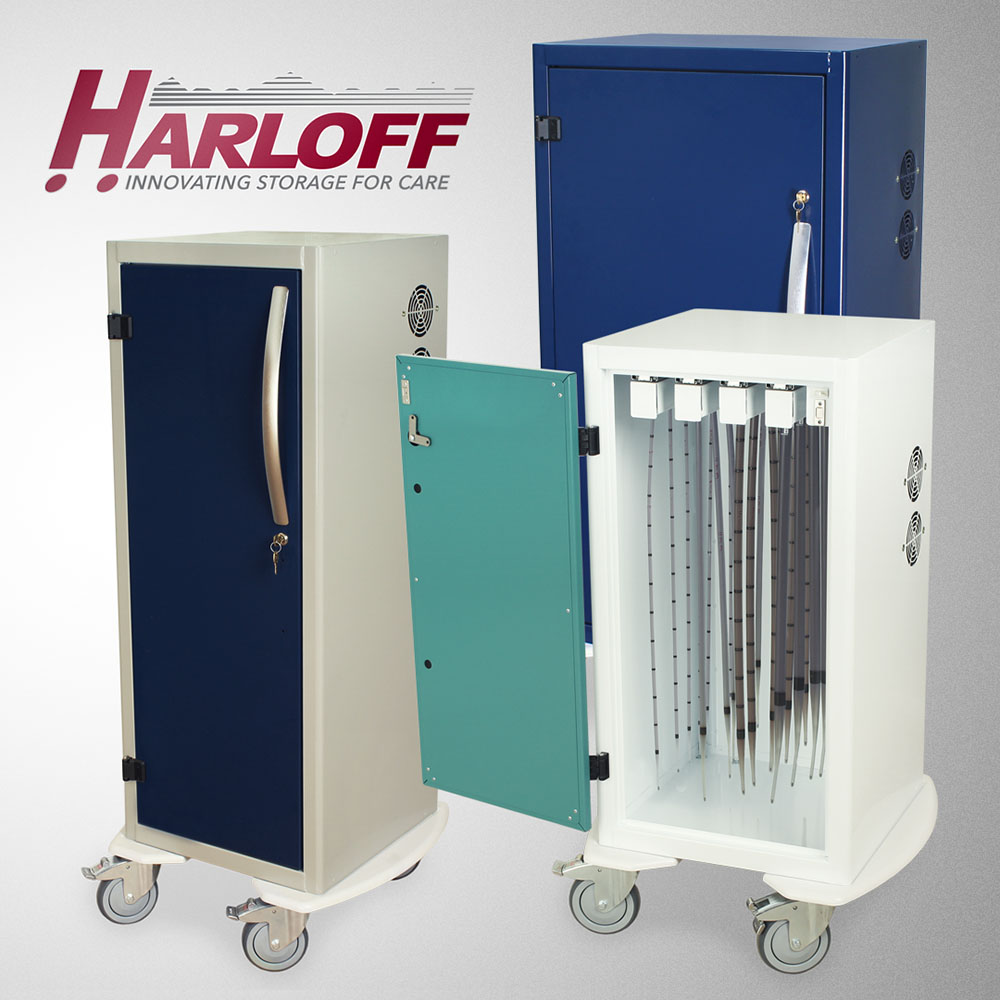
| Model | Capacity | Max Dilator Length | Drying Package | Best Fit |
|---|---|---|---|---|
| DSC24SK | 24 dilators | 28” | No | Small clinics wanting compact vertical storage |
| DSC24SK-DP | 24 dilators | 28” | Yes | Smaller facilities wanting HEPA-filtered drying |
| DSC24TK | 24 dilators | 39” | No | Mid-size departments preferring gravity drying |
| DSC24TK-DP | 24 dilators | 39” | Yes | Balanced “middle-ground” drying model |
| DSC36TK-DP | 36 dilators | 39” | Yes | High-volume GI labs with large inventories |
| DSC36TGK-DP | 36 dilators | 39” | Yes + Glass Door | Large departments prioritizing inventory visibility |
Which Model Is Right for You?
Choose the DSC24SK if:
You have a smaller inventory, use shorter dilators and are primarily looking for improved, organized vertical storage in a compact footprint. This model works especially well for outpatient GI clinics and lower-volume procedure centers that already manage separate air drying.
Choose the DSC24SK-DP if:
You want HEPA-filtered airflow but do not need a large cabinet. This is often the entry point for facilities transitioning toward vertical drying workflows while maintaining smaller dilator inventories.
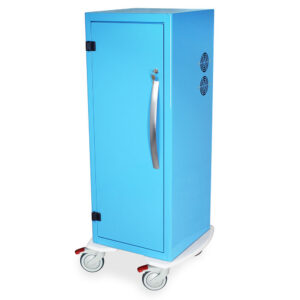
Choose the DSC24TK if:
You use longer dilators up to 39” in length, but do not require powered airflow. Many facilities choose this model because it balances capacity, organization and simplified maintenance.
Choose the DSC24TK-DP if:
You want the most versatile “middle-ground” solution for your facility’s dilator storage and drying efforts. This model is commonly selected by GI departments wanting active drying capability without having to commit to our larger 36-capacity design.
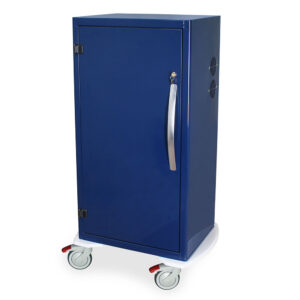
Choose the DSC36TK-DP if:
Your department performs frequent dilation procedures, maintains a broad dilator inventory and wants centralized storage with HEPA-filtered airflow. This is the workhorse model for high-volume environments.
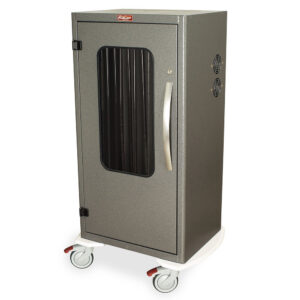
Choose the DSC36TGK-DP if:
Inventory visibility is a daily operational issue. The tempered glass window upgrade seen with this model was developed directly from customer requests and allows staff to quickly verify inventory without repeatedly opening the cabinet and disrupting airflow.
Common Buying Mistakes to Avoid
1. Buying Based Only on Current Inventory
Many facilities underestimate future growth as clinical teams continue to increase their dilator sizes over time, especially when physician preferences evolve. Choosing a cart that barely fits current inventory can rapidly begin to limit the department’s operations.
2. Neglecting Dilator Length
One of the most common dilator specification mistakes is overlooking maximum length. Facilities with a wide selection of dilators require taller storage designs that can appropriately accommodate dilators measuring up to 39” in length.
3. Assuming Drying Needs Are Universal
Not every department requires HEPA-filtered airflow. Some facilities already dry separately and just need organized vertical storage. Others are actively moving toward airflow-supported drying practices. Workflow and facility reprocessing standards should drive this decision — not trends alone.
4. Overlooking Visibility and Workflow Efficiency
The glass door upgrade on Harloff’s DSC36TGK-DP may seem minute at first, but steady feedback has shown that inventory visibility can reduce unnecessary cabinet openings and help decrease overall drying times.
5. Forgetting Accessories
Accessories often become some of the most-used features after installation.
The optional five-pocket balloon holder upgrade makes balloon dilators more easily accessible during procedures and helps reduce potential clutter around the procedure room.
The optional battery backup unit (BBU) provides uninterrupted electrical power and surge protection for drying-package models. Facilities commonly transporting carts between rooms particularly value airflow continuation while moving dilators from one area to another.
Features Shared Across the Dilator Cart Line
Regardless of model, every Harloff dilator cart is built around the same core design philosophy:
- Vertical hanging organization
- Pull-out slides for easier access
- Configurable holders tailored to actual dilator inventory
- Fully welded steel construction
- Scratch-resistant powder coat finish
- Quiet rolling casters with steering and braking functionality
- Curved protective bumpers
- Multiple locking options including electronic locks
- Long-term durability backed by Harloff’s robust warranty
These common design features matter because dilator carts are not simply storage cabinets. In practice, they become part of the procedural workflow itself.
The Bottom Line
As guidelines for drying larger endoscopes gravitate more toward HEPA-filtered air paired with vertical hanging, it is likely that guidelines for dilators will soon follow suit. As more facilities rethink dilator reprocessing workflows and move toward vertical hanging practices, selecting a cart designed around real clinical usage patterns can make a significant difference in organization, accessibility and overall workflow efficiency.
What clinical teams consistently say is this: “Once we moved to organized vertical storage, we didn’t want to go back.”
When choosing between models, the “best” dilator cart is rarely the biggest or most expensive option. The right choice depends on how your department individually manages reprocessing, storage access, procedure volume and inventory growth.
Smaller clinics will benefit the most from compact gravity-drying storage carts. Mid-size departments often prefer the flexibility of the DSC24TK-DP. High-volume GI labs frequently choose the DSC36TK-DP or DSC36TGK-DP because centralized capacity and workflow visibility have gradually become preferred.