
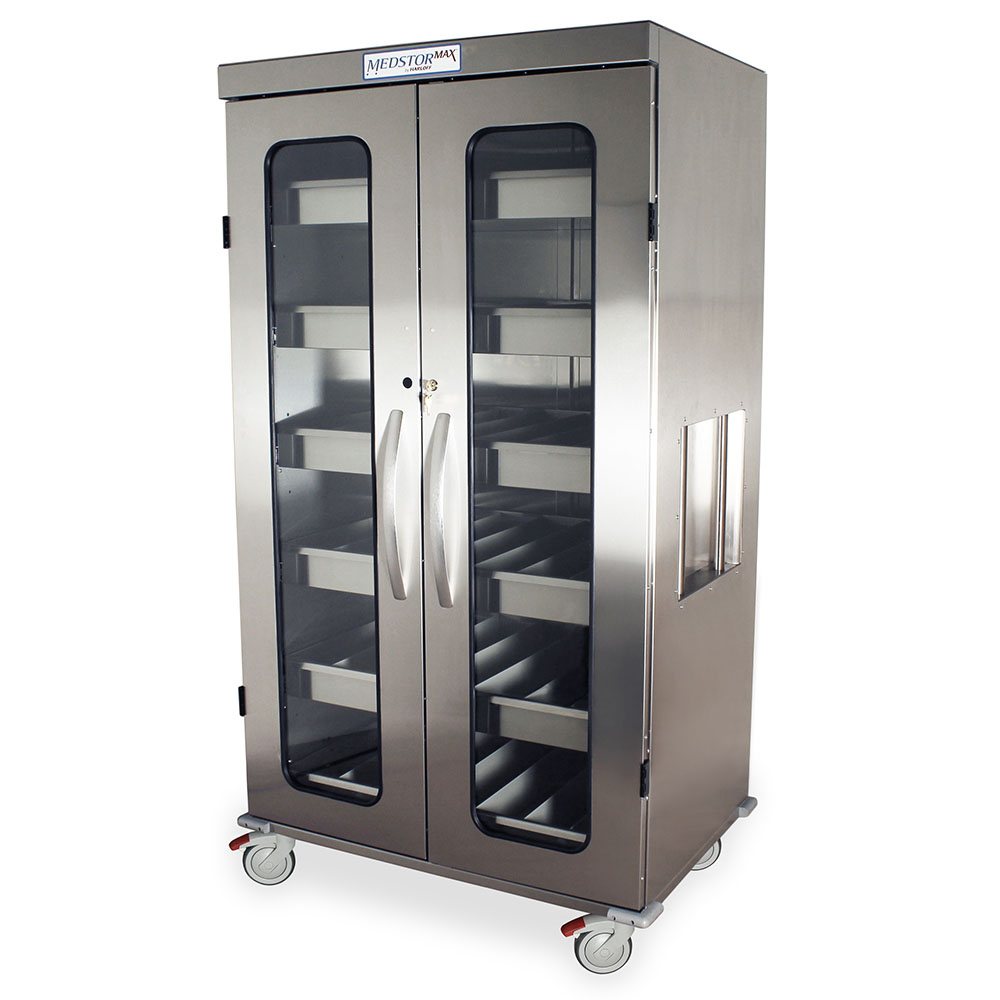

Description
This Stainless Steel IntraOcular Lens Storage Cart provides attractive, secure storage for IOL lens boxes. Provides mobility and cataract lens storage for multiple brands and sizes of lens boxes including Alcon, Bausch and Lomb, Rayner, Abbot Medical Optics and larger Johnson & Johnson boxes.
Stainless Steel IOL Carts in Clinical Environments and Real-World Use
The following insights are based on common usage patterns and feedback from ophthalmic surgical teams.
What teams value about stainless steel construction
“It aligns with the rest of our OR equipment.”
Stainless steel is commonly used throughout surgical environments due to its durability and cleanability. Facilities that maintain stainless steel standards in procedure rooms often prefer carts that match existing equipment, especially when storage may be brought into or near the OR.
“It holds up well with frequent cleaning.”
In settings with strict infection control protocols, materials matter. Stainless steel surfaces are typically chosen for their resistance to corrosion and their ability to withstand repeated cleaning and disinfection.
“We wanted something that could go anywhere in the facility.”
Because of its material properties, stainless steel is often selected for carts that may move between storage areas and clinical spaces, including environments with higher cleanliness requirements.
Common use cases
- OR-compatible storage: Supporting environments where carts may be brought into procedure rooms
- Strict infection control settings: Facilities prioritizing materials that are easy to clean and maintain
- Standardized equipment environments: Matching existing stainless steel fixtures and equipment
- Mobile clinical workflows: Allowing carts to move between storage and treatment areas as needed
Workflow considerations
Same configuration, different material
The MSS-IOL1092 offers the same drawer layout and vertical clearance as its standard counterpart, with the primary difference being stainless steel construction. This allows teams to choose material preference without changing storage configuration.
Available across multiple models
While shown here in the 1092 configuration, stainless steel construction is often requested for other IOL cart sizes as well. Facilities can typically match their preferred configuration with their preferred material.
Designed for demanding environments
This option is most commonly selected when carts are expected to meet higher standards for cleanliness, durability, or environmental consistency.
Tradeoffs teams consider
Higher upfront cost
Stainless steel construction is typically more expensive than standard materials, which may factor into purchasing decisions depending on budget and scope.
Visible surface marks
Fingerprints and smudges may be more noticeable on stainless steel surfaces, especially in high-touch environments.
Who this option tends to work best for
- Facilities that bring storage carts into or near the OR
- Surgical environments with strict cleaning and material requirements
- Hospitals and centers standardizing on stainless steel equipment
- Teams prioritizing durability and long-term surface performance
When standard construction may be sufficient
- Storage used exclusively outside clinical environments
- Facilities without specific material requirements
- Projects where budget is the primary constraint
Stainless steel construction is available across multiple IOL cart configurations for facilities with specific clinical or material requirements.