



Description
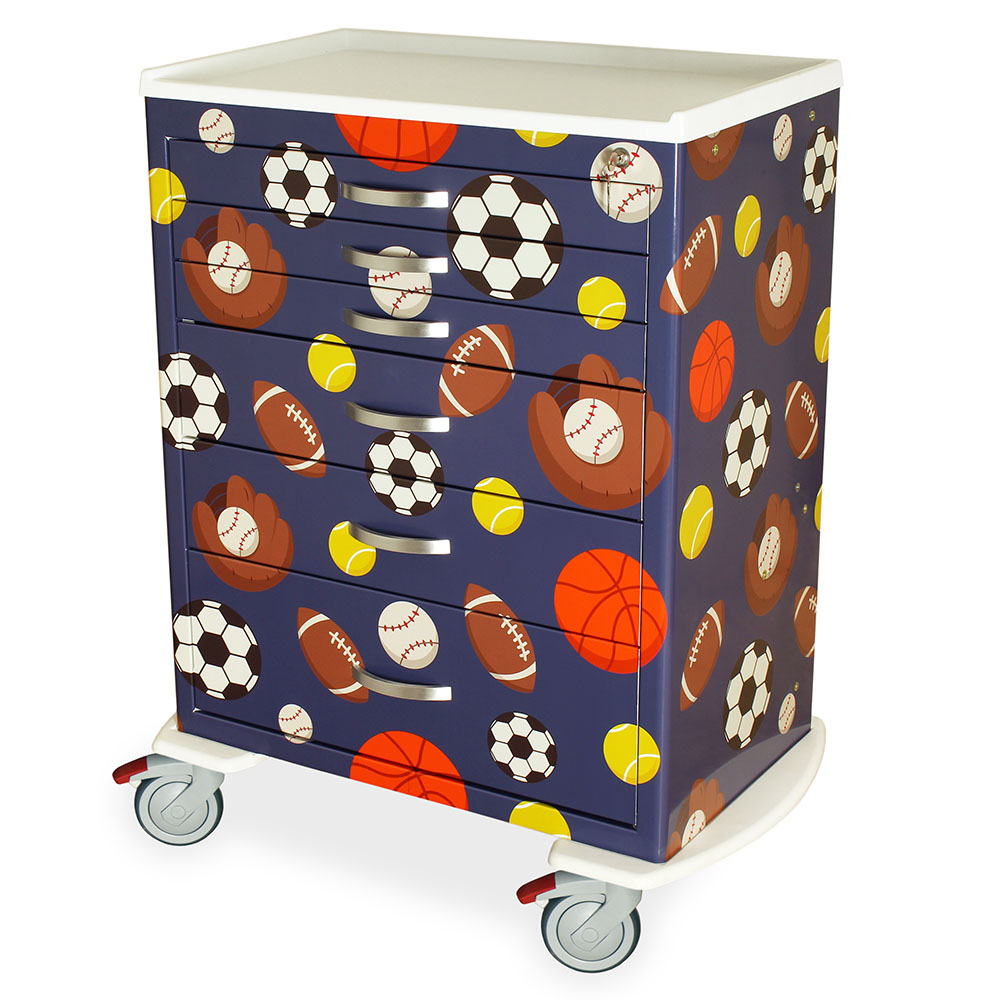
Comfort carts provide tangible and psychological benefits to patients by distributing items for fun, relaxation and mental health. These vinyl wrapped carts can be used as comfort carts (use patterns Alphabet, Dinosaurs or others), traditional clinical carts (customizing your cart with your facility’s colors and logo), within veterans facilities and military hospitals (Camouflage pattern), inside veterinarian clinics (Pawprints pattern) or for a wide variety of medical or LTC settings. Custom medical cart options include either full wrap or a partial wrap with your choice of available drawer colors plus the exterior body covered in a wrap.
Full Vinyl-Wrapped Pediatric Comfort Cart for Patient Support, Engagement, and Positive Care Experiences
Healthcare organizations increasingly recognize that excellent patient care extends beyond clinical treatment. For pediatric patients in particular, anxiety, uncertainty, boredom, and fear can significantly affect the healthcare experience. Whether a child is awaiting a procedure, receiving treatment, recovering from surgery, attending therapy sessions, or spending an extended stay in the hospital, small moments of comfort can make a meaningful difference. The MDS3030K06+MDFW Comfort Cart was designed to support those moments.
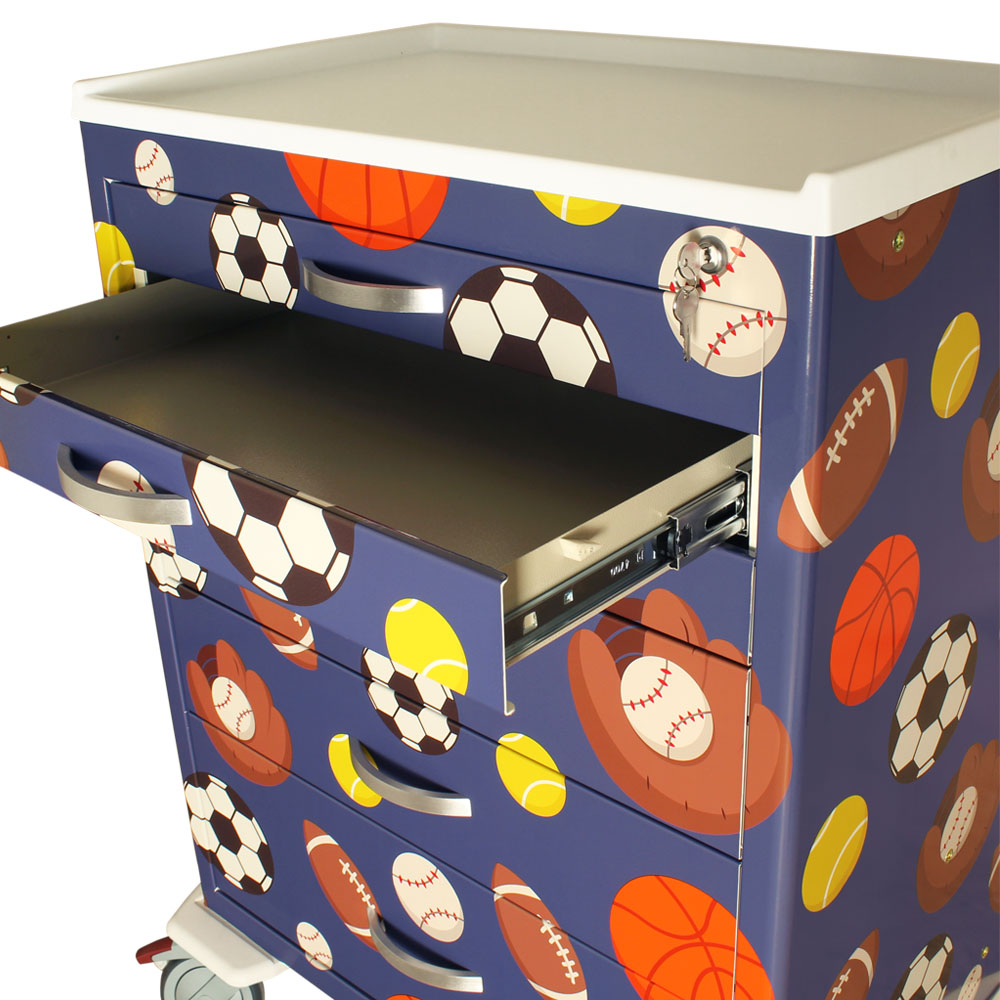
Built on Harloff’s proven M-Series cart platform, this comfort cart combines secure storage with a vibrant full-body vinyl wrap that transforms the appearance of the cart from traditional medical equipment into something more welcoming, approachable, and engaging for children. Available in a variety of pediatric-friendly, decorative, veterinary, and specialty patterns, the cart can help create positive interactions while storing the toys, activities, sensory items, comfort products, snacks, books, blankets, and supplies commonly used in pediatric comfort programs.
The following insights are based on common usage patterns and feedback from children’s hospitals, pediatric departments, child life programs, therapy centers, outpatient clinics, long-term care facilities, rehabilitation programs, and healthcare organizations focused on patient experience initiatives.
What Clinical Teams Say About This Model
“This cart changes how children react when it enters the room.”
One of the most common observations from pediatric teams is that appearance matters. Traditional medical carts are often associated with procedures, examinations, medications, or other stressful experiences. A brightly decorated comfort cart can create a completely different first impression.
Clinical teams report that children become curious about the cart before they become anxious about the reason for the visit. Instead of focusing on treatment, many children focus on the colorful patterns, the possibility of a reward, or the activities stored inside.
This shift in attention can help create more positive interactions between caregivers and patients. For many facilities, the comfort cart becomes a recognizable symbol associated with encouragement, support, and positive experiences.
“It helps create moments of normalcy.”
Hospitalization can disrupt nearly every aspect of a child’s routine. Many pediatric departments use comfort carts to provide opportunities for play, creativity, distraction, and engagement during what can otherwise be difficult experiences.
Items commonly stored inside comfort carts include:
- Toys
- Coloring supplies
- Activity books
- Crafts
- Sensory items
- Small rewards
- Comfort items
- Blankets
- Hygiene products
- Snacks
- Reading materials
Clinical teams frequently note that these resources help create moments that feel less clinical and more familiar to young patients.
“The cart supports our child life and patient experience programs.”
Many healthcare organizations have invested significantly in child life services, family-centered care initiatives, and patient experience improvement programs. Comfort carts often become a visible extension of those efforts.
Child life specialists, nurses, therapists, social workers, and patient experience teams commonly use comfort carts to support engagement activities, milestone celebrations, procedure preparation, distraction techniques, and reward-based programs. Because the cart can move throughout the facility, resources can be brought directly to patients rather than requiring patients to travel to a separate activity area.
Where This Model Fits in Your Workflow
Comfort carts are remarkably flexible and can support a wide variety of healthcare environments.
Children’s Hospitals
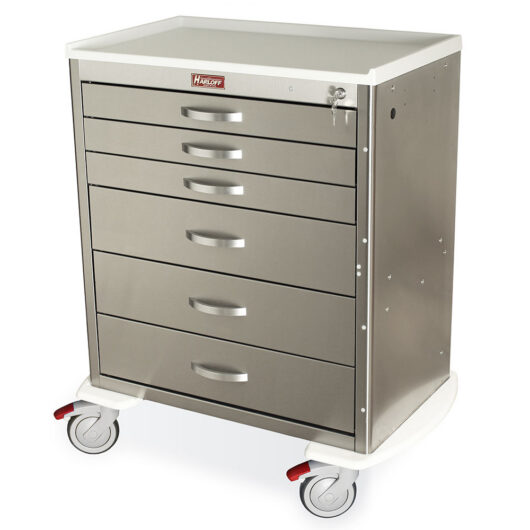
Many children’s hospitals use comfort carts as mobile activity centers that travel between patient rooms, treatment areas, and waiting spaces. The six-drawer configuration provides ample room for organizing resources based on age groups, activities, or program objectives.
Pediatric Units
Nursing departments often utilize comfort carts to provide positive reinforcement, rewards, and engagement opportunities during difficult procedures or extended stays. The cart can become part of daily patient interactions while helping staff maintain organized inventory.
Infusion Centers
Patients receiving recurring treatments frequently benefit from distraction and engagement activities. Comfort carts can help transform treatment sessions into more positive experiences by offering age-appropriate activities and comfort items.
Rehabilitation and Therapy Programs
Physical therapy, occupational therapy, and pediatric rehabilitation teams often use comfort items as motivational tools. The cart provides a convenient way to organize and transport those resources throughout the facility.
Behavioral Health and Sensory Programs
Many organizations stock comfort carts with sensory items, fidget tools, calming activities, and therapeutic resources designed to support emotional regulation and stress reduction.
Veterinary Clinics
Although primarily marketed toward pediatric healthcare environments, many veterinary facilities utilize animal-themed comfort carts to improve client experiences and support pet engagement activities.
Why Buyers Choose This Model
It Creates a More Welcoming Environment
The primary reason this model exists is to change how patients perceive the cart. The full vinyl wrap completely covers the cart exterior, creating a visual experience that feels dramatically different from traditional medical equipment. Many facilities view this transformation as a valuable component of patient-centered care.
Supports Anxiety Reduction Efforts
Healthcare organizations increasingly recognize the connection between emotional well-being and the patient experience. While a comfort cart is not a clinical intervention, many teams report that access to familiar activities and positive distractions can help reduce stress and improve cooperation during care activities.
Highly Visible and Engaging
The full-wrap design maximizes visual impact. Unlike partial-wrap configurations, the entire cart exterior becomes part of the patient experience. This often makes the cart easier for children to recognize and remember.
Organized Resource Management
Beyond the appearance, the cart remains a highly functional storage solution. The six-drawer configuration helps departments organize resources by category, age group, activity type, or program function. This allows staff to maintain inventory control while supporting patient engagement initiatives.
Flexible Design Options
Facilities can choose from a variety of repeatable pattern options including:
- Children’s themes
- Decorative patterns
- Nature-inspired designs
- Camouflage themes
- Veterinary-focused graphics
Organizations may also create fully customized designs incorporating branding, logos, colors, or facility-specific artwork.
What Teams Often Prioritize
When evaluating comfort carts, healthcare organizations frequently focus on considerations that differ from traditional medical cart purchases.
Patient Engagement
Many teams prioritize solutions that encourage interaction and curiosity. The visual appearance of the cart often plays a significant role in achieving that goal.
Program Visibility
Child life and patient experience programs frequently seek highly visible tools that demonstrate organizational commitment to patient-centered care. Comfort carts can become a recognizable part of those initiatives.
Flexibility
Departments often need a cart that can support changing activities, seasonal programs, and evolving patient populations. The six-drawer configuration provides substantial flexibility for different program requirements.
Durability
Despite the decorative appearance, the cart retains the durability of Harloff’s M-Series platform, including full-extension drawer slides, protective bumpers, quiet-rolling casters, and a durable powder-coated structure.
Implementation Considerations
Organizations that plan to actively use the cart as part of child life programming, reward systems, comfort item distribution, sensory support activities, or engagement programs often realize the greatest value in patient experience initiatives.
Facilities should also evaluate which wrap design best aligns with their patient population. Children’s themes remain the most popular option, but decorative, veterinary, military, and custom-branded designs may be appropriate depending on the intended environment.
Both full-wrap and half-wrap designs are available depending on your desired objective.
Educational Insight: Why Comfort Programs Matter
Research and clinical experience continue to demonstrate the importance of addressing emotional and psychological needs alongside physical care. For pediatric patients, opportunities for play, distraction, creativity, and comfort can help create more positive healthcare experiences for both children and their families.
As a result, many hospitals have expanded investments in child life programs, family-centered care initiatives, patient experience departments, and comfort-based interventions. Comfort carts provide a practical way to bring those resources directly to the patient while maintaining organization and mobility.
The Bottom Line
This product is often best for facilities saying, “We want a highly visible, engaging comfort cart that helps create positive experiences for pediatric patients.”

Reviews
There are no reviews yet.