

Description
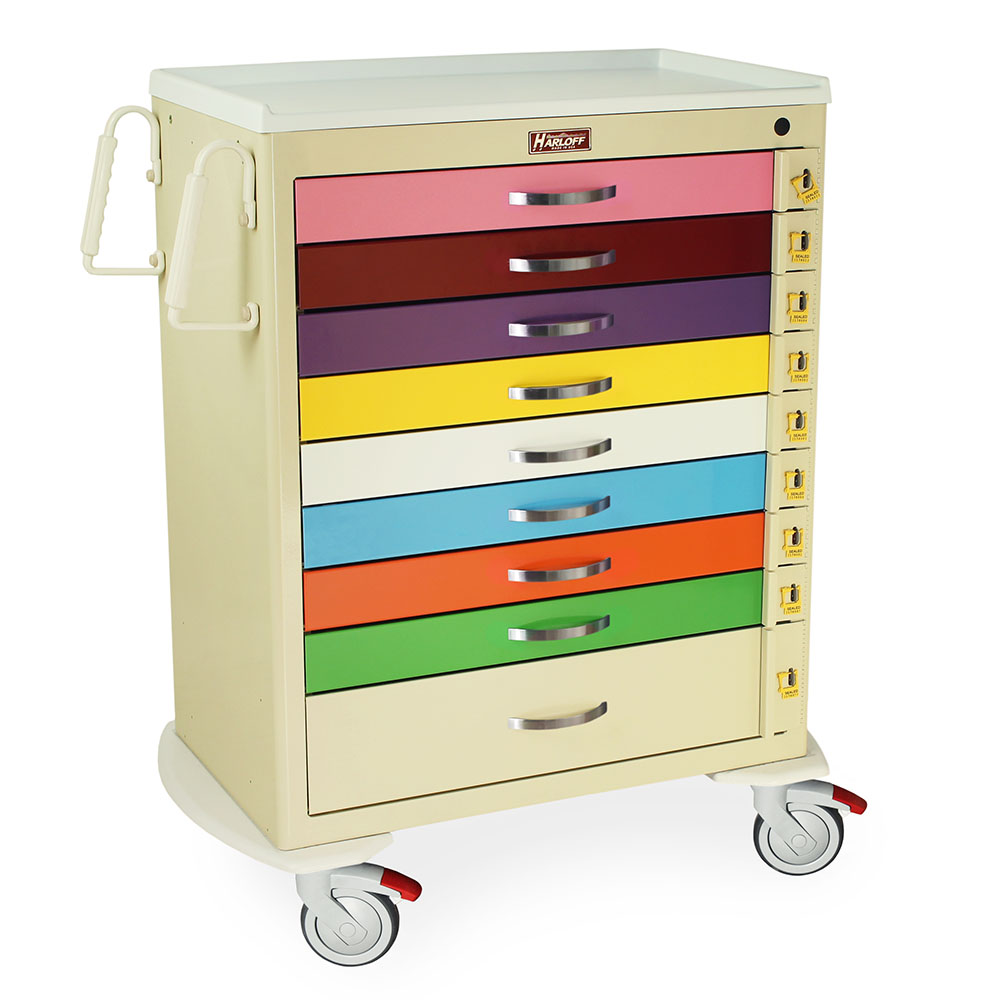
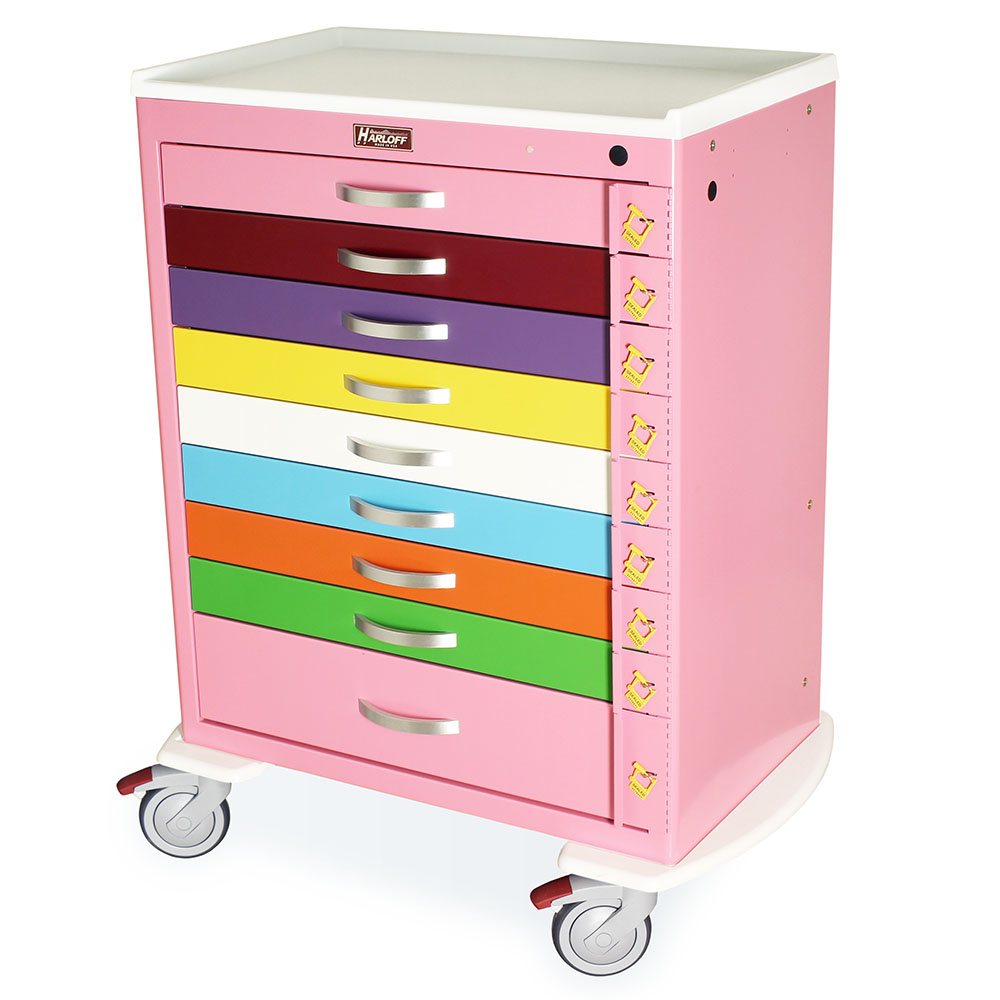
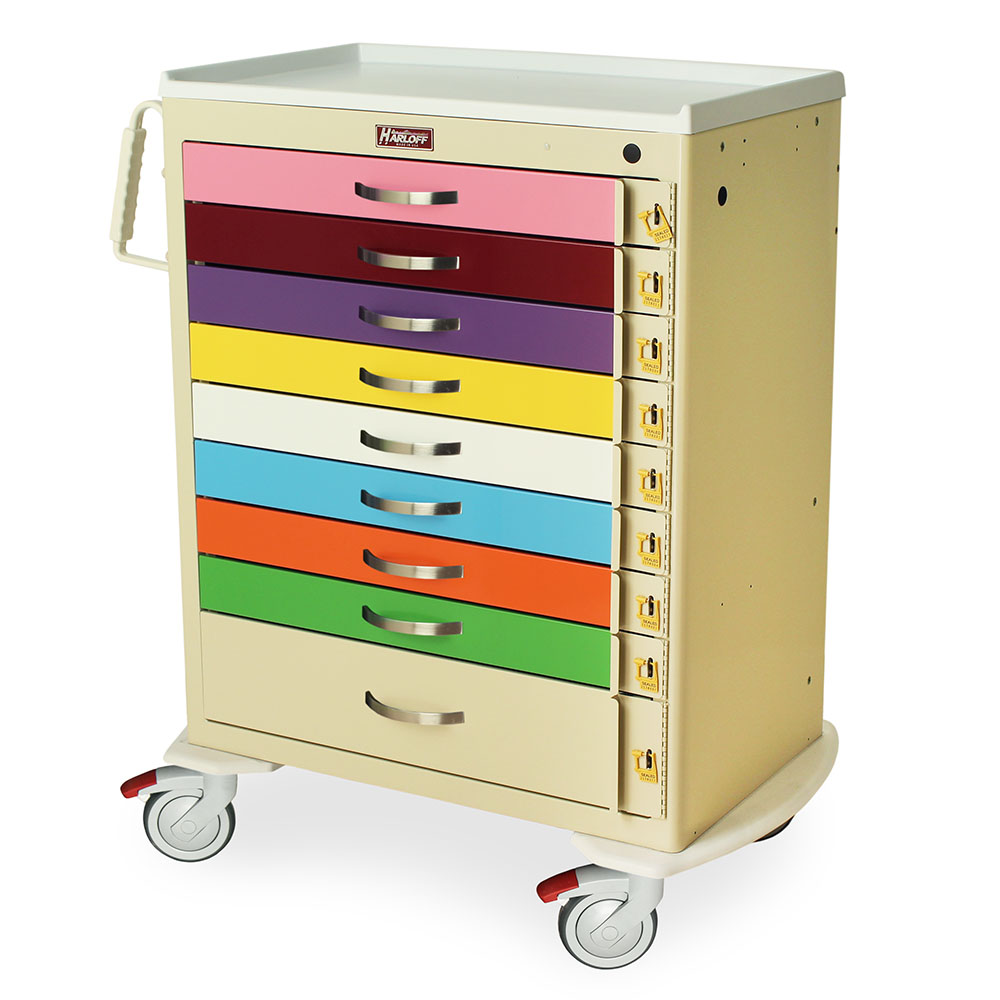
Designed and built to meet the needs of today’s healthcare market. Ergonomic side handles, comfort drawer pulls, and a standard plastic top make things easier for your staff and help support your infection control initiatives. M-Series pediatric crash carts offer you choices. The MDS3030B09PED replaces cart model 6400PEC.
Tall Nine-Drawer Pediatric Emergency Cart with Color-Coded Drawer Organization
When healthcare organizations evaluate pediatric crash carts, the conversation usually centers on one question: How quickly can clinical staff locate the correct supplies during a pediatric emergency?
The Harloff MDS3030B09PED was designed specifically around that challenge. While standard crash carts focus on emergency supply storage, this pediatric model incorporates a multi-colored drawer labeling system comparable to the Broselow color coding method, helping caregivers organize emergency supplies according to pediatric patient size categories and treatment protocols.
With nine drawers, individual drawer-level breakaway security, full-extension drawer slides, ergonomic mobility features, and a tall storage configuration, this cart is commonly selected by hospitals, pediatric emergency departments, children’s healthcare facilities, NICUs, pediatric clinics, and specialty treatment centers seeking both rapid access and organized pediatric-specific emergency preparedness.
The following insights are based on common usage patterns and feedback from pediatric healthcare teams, emergency departments, and hospital purchasing professionals evaluating pediatric crash cart solutions.
What Clinical Teams Say About This Model
“We needed a pediatric crash cart that reduced searching during emergencies.”
One of the primary reasons facilities choose the MDS3030B09PED is its emphasis on visual organization. During pediatric emergencies, staff members often have only seconds to locate medications, airway supplies, IV equipment, and emergency treatment tools appropriate for a specific patient size range.
The multi-colored drawer labeling system helps create visual distinctions between supply categories, reducing reliance on reading labels under stressful conditions. Clinical teams frequently report that consistent drawer color assignments simplify orientation for both experienced pediatric staff and clinicians who rotate between departments.
This becomes particularly valuable in facilities where emergency response teams may include nurses, physicians, respiratory therapists, and support personnel who need to work together quickly during high-acuity situations.
Rather than relying exclusively on memory or drawer labels, teams can develop standardized supply placement protocols tied to specific color zones, helping improve consistency across shifts and departments.
“Restocking is much easier than traditional pediatric crash carts.”
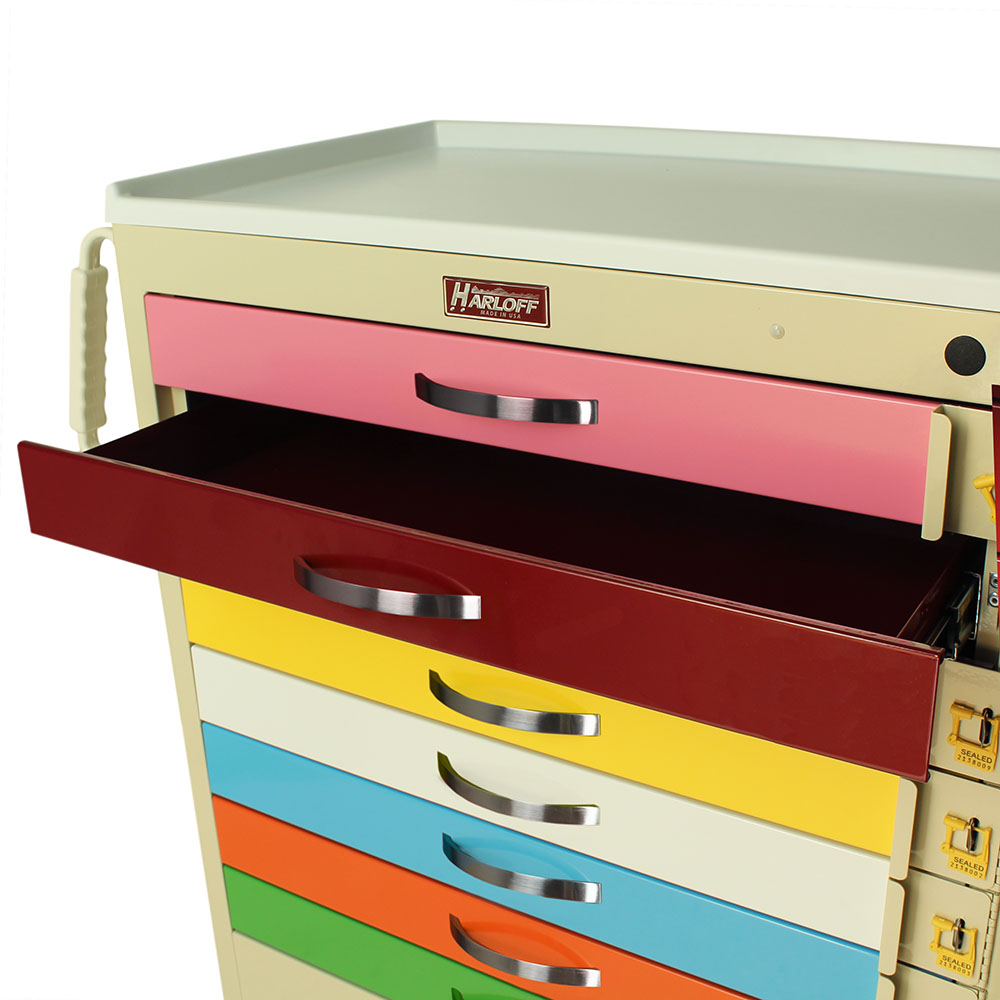
A common operational challenge with pediatric crash carts is what happens after an emergency. Many traditional crash cart configurations require extensive review and replenishment procedures once security seals are broken. The MDS3030B09PED addresses this issue through its split breakaway locking system, which uses individual breakaway bars for each color-coded drawer section.
Facilities often appreciate that staff can access only the drawer needed during a response while leaving other compartments secured.
This approach provides several operational benefits:
- Reduced post-event restocking time
- Less inventory disruption
- Faster return-to-service readiness
- Simplified compliance documentation
- Improved accountability during inspections
Many nursing departments report that drawer-by-drawer access helps minimize unnecessary inventory verification after routine interventions or limited emergency events.
For organizations focused on crash cart readiness audits, this can significantly reduce the workload associated with maintaining emergency preparedness programs.
“The cart feels built for everyday hospital use, not just emergencies.”
Crash carts spend most of their life waiting for the moment they are needed.
Because of that, many healthcare organizations prioritize durability and long-term reliability just as much as emergency functionality.
The MDS3030B09PED incorporates several features frequently requested by clinical teams:
- Quiet rolling 5-inch casters
- Ergonomic side push handles
- Protective corner bumpers
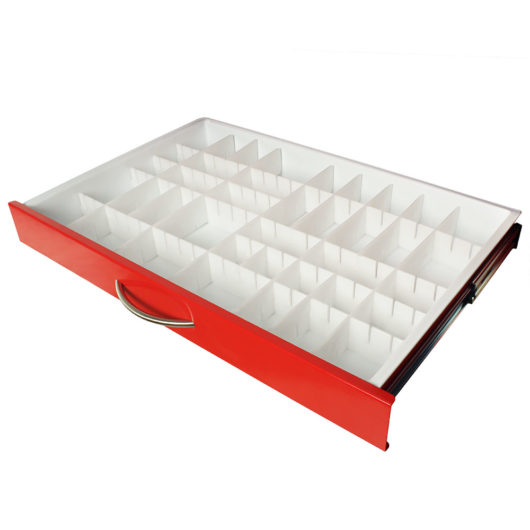
- Full-extension drawer slides
- Replaceable plastic top
- Durable steel construction
- Twelve-year manufacturer’s warranty
Facilities moving carts between treatment rooms, emergency bays, pediatric units, and procedural areas often value the combination of mobility and stability. The replaceable plastic top also helps support long-term ownership by allowing replacement of a high-wear component without replacing the entire cart.
Where This Model Fits In Your Workflow
Pediatric Emergency Departments
Emergency departments treating infants, children, and adolescents often require immediate access to pediatric-specific medications, airway devices, vascular access supplies, and resuscitation equipment. The color-coded organization system helps support rapid identification and retrieval of supplies during time-sensitive interventions.
Children’s Hospitals
Dedicated pediatric hospitals frequently standardize emergency response equipment across departments. The nine-drawer layout provides sufficient storage capacity for comprehensive emergency preparedness while maintaining a familiar organizational structure for staff working throughout the facility.
Neonatal and Pediatric Intensive Care Units
NICUs and PICUs often require specialized emergency equipment that differs substantially from adult care environments. The tall cabinet design provides storage flexibility for maintaining organized inventories of critical pediatric supplies while preserving a relatively compact floor footprint.
Pediatric Clinics and Ambulatory Care Centers
Outpatient pediatric facilities increasingly maintain emergency response capabilities despite lower emergency event volumes. Many organizations select this model because it provides hospital-grade crash cart functionality while supporting long-term readiness and inventory organization.
Specialty Pediatric Treatment Centers
Children’s rehabilitation facilities, pediatric surgery centers, pediatric oncology programs, and specialty treatment clinics frequently maintain emergency preparedness requirements tailored to their patient populations. The cart’s storage capacity and organizational flexibility support customized supply configurations based on specific clinical needs.
Why Buyers Choose This Model
Pediatric-Specific Organization
The most obvious differentiator is the multi-colored drawer labeling system comparable to the Broselow color coding method. Visual organization helps support faster decision-making and more consistent supply retrieval under pressure.
High Storage Capacity Without Excessive Footprint
The tall nine-drawer configuration provides substantial storage capacity while utilizing vertical space efficiently. Rather than expanding outward, the cart expands upward, allowing departments to maintain comprehensive emergency inventories without significantly increasing floor space consumption.
Improved Restocking Efficiency
Purchasing departments often focus not only on emergency performance but also on long-term operational costs. The split breakaway system helps reduce labor associated with post-event inventory checks and cart replenishment.
Mobility Across Multiple Care Areas
Many organizations deploy crash carts in flexible environments where equipment may need to move between treatment spaces. The ergonomic push handles and quiet-rolling casters support routine movement while helping maintain stability and maneuverability.
Long-Term Durability
Healthcare equipment investments are often evaluated over many years of service. The combination of steel construction, replaceable components, protective bumpers, and a twelve-year warranty appeals to organizations seeking long-term value rather than short-term acquisition cost savings.
What Pediatric Teams Often Prioritize
Standardized Emergency Response
Many facilities seek to create consistent emergency workflows across departments. A clearly organized pediatric crash cart helps support staff training, orientation, and competency programs.
Reduced Search Time
Every second matters during pediatric emergencies. Teams often prioritize organization systems that reduce time spent locating supplies and increase confidence during high-stress situations.
Easier Staff Training
Organizations with rotating personnel, residents, travelers, or cross-trained clinicians frequently benefit from visual organizational systems that are easy to understand and remember.
Inventory Visibility
The nine-drawer design helps departments create logical supply assignments and inventory management procedures. Many facilities establish standardized drawer contents that simplify inspections, replenishment, and regulatory readiness.
The Bottom Line
This product is often best for facilities saying, “We need a pediatric crash cart that helps staff find the right supplies quickly, simplifies restocking after emergencies, and provides enough capacity to support comprehensive pediatric emergency preparedness.”
The Harloff MDS3030B09PED combines pediatric-focused organization, drawer-by-drawer breakaway security, high-capacity storage, durable construction, and long-term operational practicality into a crash cart designed for real-world pediatric emergency response environments.
For hospitals, children’s healthcare facilities, NICUs, pediatric clinics, and specialty care centers seeking a dedicated pediatric crash cart solution, it represents a balanced approach to emergency readiness, workflow efficiency, and long-term value.
Frequently Asked Questions About Pediatric Crash Carts
What makes a pediatric crash cart different from a standard crash cart?
A pediatric crash cart is designed specifically for treating infants and children during medical emergencies. Unlike standard crash carts, pediatric models typically use a color-coded organizational system that helps clinical staff quickly identify supplies, medications, and equipment appropriate for different pediatric patient sizes. The MDS3030B09PED uses a multi-colored drawer labeling system comparable to the Broselow color coding method while also incorporating individual breakaway security and restocking accountability for each color-coded drawer section.
Why do pediatric crash carts use color-coded drawers?
During pediatric emergencies, clinicians often need to locate supplies within seconds. Color-coded organization helps reduce searching, supports standardized emergency workflows, and improves consistency between departments. Many healthcare organizations use color-based supply organization to help staff quickly identify treatment categories and specific equipment designed for a child’s unique size.
Why is a split breakaway locking system important?
Traditional crash carts often require extensive restocking after seals are broken. The MDS3030B09PED uses individual breakaway bars for each drawer section, allowing staff to access only the supplies needed while leaving other drawers secured. This can reduce inventory disruption, simplify compliance documentation, and help departments return carts to service more quickly after an event.
Who typically uses a pediatric crash cart?
Pediatric crash carts are commonly found in children’s hospitals, pediatric emergency departments, NICUs, PICUs, pediatric clinics, ambulatory surgery centers, specialty treatment facilities, and labor and delivery units. Any healthcare environment responsible for pediatric emergency preparedness may benefit from a dedicated pediatric crash cart.
How much storage capacity should a pediatric crash cart have?
The answer depends on patient volume, departmental protocols, and emergency preparedness requirements. Many facilities choose a nine-drawer configuration like the MDS3030B09PED because it provides enough storage to organize medications, airway supplies, vascular access equipment, and emergency response tools without requiring multiple carts or supplemental storage locations.

Reviews
There are no reviews yet.