

A Practical Buyer’s Guide to Choosing the Right Harloff Cabinet
In real clinical environments, selecting a storage or drying cabinet for small scopes usually comes down to how scopes move through workflows, how drying is handled, how much space is available and how many people are interacting with the system throughout a typical day.
Some facilities want integrated drying. Others already have validated drying processes and only need secure, organized storage options. Some need wall-mounted efficiency in tight procedure rooms. Others require floor-standing capacity for higher-volume turnover. Within Harloff’s portfolio of small scope cabinets, the key distinction is not just size—it’s workflow philosophy.
This guide breaks down the full range of small scope cabinets offered by Harloff, explains where each model specifically fits in facilities and highlights the real-world tradeoffs that matter most in ENT, bronchoscopy or multi-specialty environments.
The Core Decision Framework: What Actually Changes Between Models
Across Harloff’s small scope cabinet line, most purchasing decisions come down to five key variables:
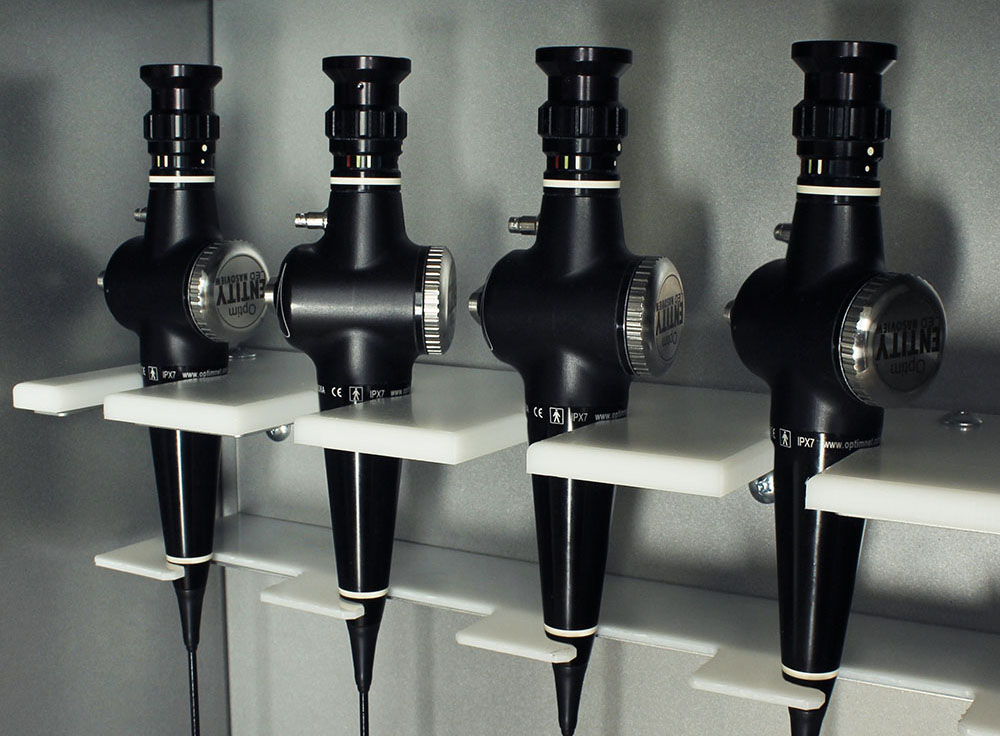
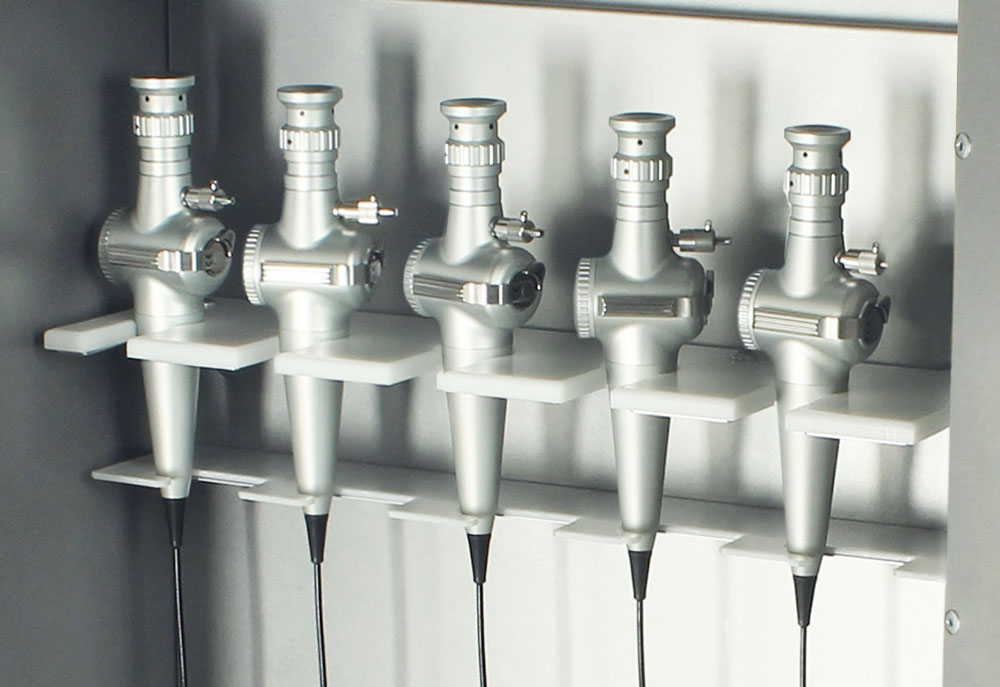
Scope type determines whether you are storing ENT scopes (smaller, higher density) or bronchoscopes (larger, fewer per cabinet). Some cabinets support both, but capacity can shift depending on configuration.
Capacity is the most obvious differentiator, as Harloff cabinets can range from anywhere from 6 ENT scopes to 14 bronchoscopes/ENT scopes depending on cabinet width and design.
Drying vs. storage is often the most important workflow distinction. Models with the “DP” drying package include active HEPA-filtered drying systems designed to support post-reprocessing drying cycles while other models are storage-only (offering only gravity drying support).
Cabinet mounting method divides buying options into either wall-mounted compact systems or floor-standing cabinets designed for higher volume and centralized storage.
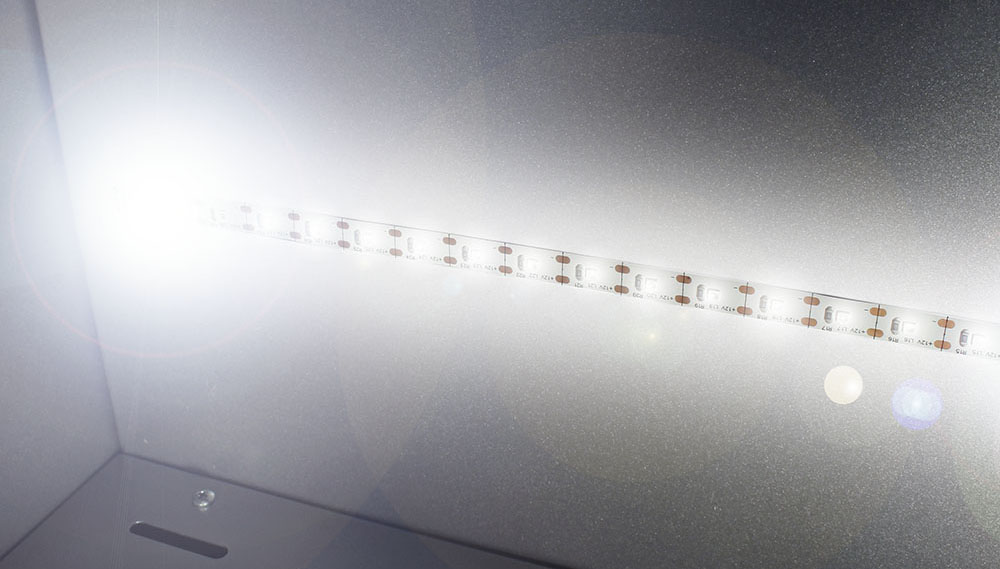
Lighting options vary by cabinet size class. Smaller cabinets may be installed with an optional UV LED disinfection light system, while larger cabinets focus on LED illumination lighting intended to improve visibility rather than disinfection.
Wall-Mounted Small Scope Cabinets
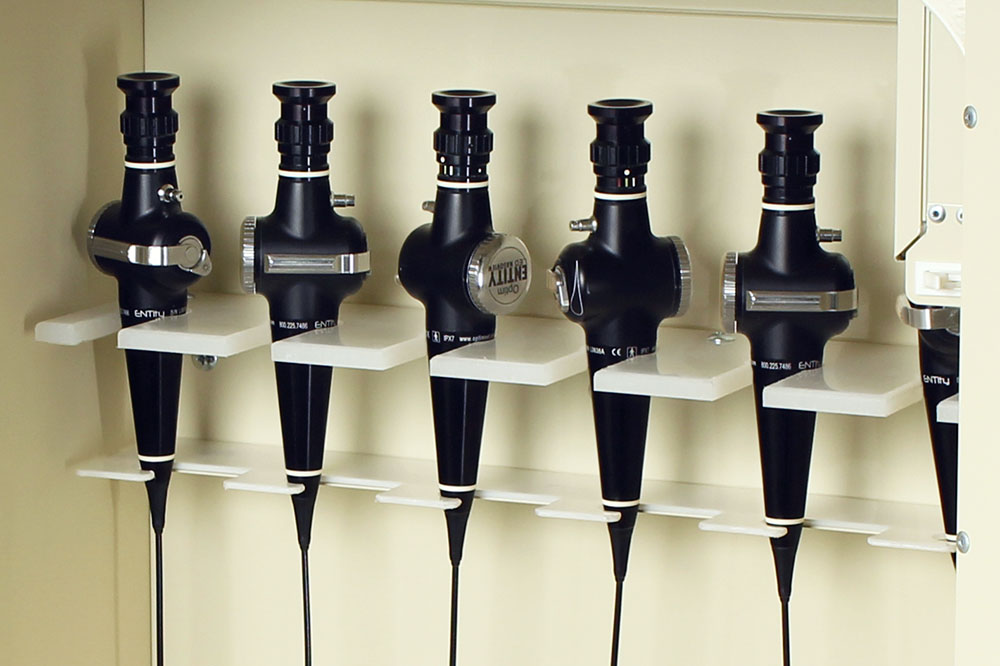
Wall-mounted cabinets are typically preferred when floor space is limited or when scopes are used in smaller procedure rooms where proximity really matters.
SCW2430DRDP – 6-ENT Scope Wall-Mounted Drying Cabinet
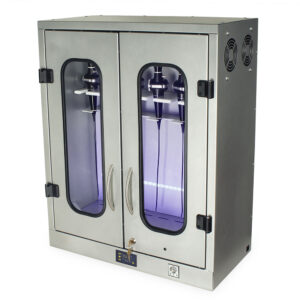
This model is designed for smaller ENT clinics or procedure rooms where integrated drying may be required, but inventory remains low. It supports up to six ENT scopes and includes a HEPA-filtered drying system. Optional UV LED disinfection is available and typically seen in settings where interior cleanliness is an additional concern to active drying.
Best fit: low-volume ENT workflows needing drying in a compact wall-mountable design.
SCW2430DR – 6-ENT Scope Storage Cabinet (No Drying Package)
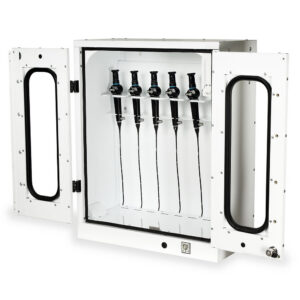
Designed for facilities that either perform drying externally or prefer gravity drying before storage. No UV options are available for this model. Clinical teams typically select this version when they want simplicity, secure storage, visual organization and wall-mounted access without the need for airflow systems.
Best fit: clinics with separate validated drying processes.
SCW2448DRDP – 4 Bronchoscopes / 8 ENT Scopes Wall-Mounted Drying Cabinet
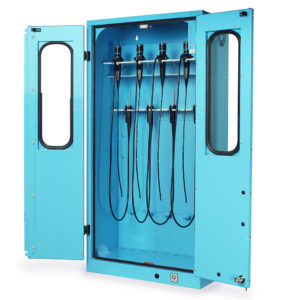
This model increases internal volume with a wall-mounted design. Because it can be configured for either ENT scopes or bronchoscopes, it is commonly used in environments where workflows overlap. Optional UV LED disinfection capabilities add interior microbial reduction support in high-touch environments.
Best fit: mixed ENT/pulmonary workflows in procedure rooms with limited space.
SCW2448DR – 4 Bronchoscopes / 8 ENT Scopes Storage Cabinet (No Drying)
This model mirrors the SCW2448DRDP in capacity but removes active drying capabilities and UV disinfecting functionality. It is frequently chosen by departments that already have centralized drying equipment or prefer to standardize drying outside the storage cabinet.
Best fit: facilities prioritizing storage flexibility over integrated drying.
Floor-Standing Small Scope Cabinets
As scope volume increases, many departments transition to floor-standing cabinets for improved capacity, airflow performance and centralized workflow management.
SC5430DRDP – 10-Scope Floor Cabinet (Short Profile)
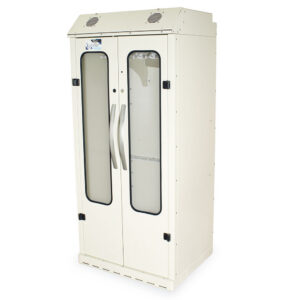
This model is designed as a “mid-tier” floor-standing solution. It supports up to 10 bronchoscopes or ENT scopes and includes the same HEPA-filtered drying system used in our larger Scope Cabinets. A defining feature is its shorter cabinet height compared to traditional full-size endoscope systems. Optional dimmable LED lighting improves internal visibility but does not provide UV disinfection benefits.
Best fit: facilities that are scaling beyond wall-mounted storage systems but still not enough to warrant high-volume GI scope level options.
SC5436DRDP – 14-Scope High-Capacity Floor Cabinet
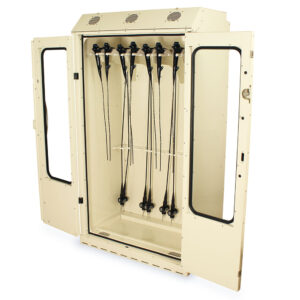
This is the highest-capacity small scope cabinet in the lineup, expanded to a 36” width design for improved storage density and airflow performance. With a 14-scope capacity, this model is often selected by high-throughput bronchoscopy and ENT departments.
Best fit: high-volume departments needing maximum small-scope capacity with enhanced drying airflow.
Model Comparison Chart (Decision Summary)
| Model | Scope Type | Capacity | HEPA Drying | Mount Type | Optional Lighting |
|---|---|---|---|---|---|
| SCW2430DRDP | ENT | 6 | Yes | Wall | UV |
| SCW2430DR | ENT | 6 | No | Wall | None |
| SCW2448DRDP | ENT / Bronch | 8 / 4 | Yes | Wall | UV |
| SCW2448DR | ENT / Bronch | 8 / 4 | No | Wall | None |
| SC5430DRDP | ENT / Bronch | 10 | Yes | Floor | LED lights |
| SC5436DRDP | ENT / Bronch | 14 | Yes | Floor | LED lights |
Ion Endoluminal System Scope Storage Considerations
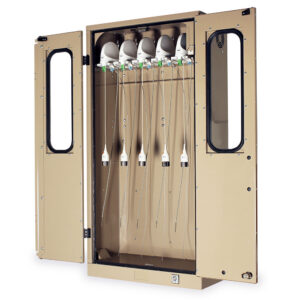
As robotic-assisted bronchoscopy programs continue to expand, more facilities are evaluating storage and drying solutions for Ion endoluminal system scopes and related pulmonary technology. Harloff’s Ion platform provides physicians with a minimally invasive way to access and biopsy lung nodules, as many pulmonary departments are now planning for storage infrastructure alongside robotic bronchoscopy implementation.
Harloff has now worked with multiple customers seeking storage solutions compatible with Ion scope workflows, including configurations built around the SCW2448DRDP platform. Because this cabinet provides larger internal dimensions than smaller ENT-focused wall cabinets while still maintaining a compact footprint, it has proven to be a practical solution for facilities needing protected storage as well as active drying support for their advanced bronchoscopy programs. Clinical teams exploring robotic bronchoscopy expansion often prefer solutions that fit within existing pulmonary procedure spaces without requiring the footprint of a full-size GI endoscope cabinet.
Which Model Is Right for You? (Decision Matrix)
| Clinical Need | Recommended Model |
|---|---|
| Small ENT clinic, minimal volume | SCW2430DRDP |
| ENT clinic with external drying | SCW2430DR |
| ENT and/or bronchoscopy, small footprint, Ion system compatible | SCW2448DRDP |
| Mixed specialty but storage-only workflow | SCW2448DR |
| Growing department, mid-volume bronchoscopy | SC5430DRDP |
| High-volume pulmonary or ENT service | SC5436DRDP |
Common Buying Mistakes to Avoid
One frequent mistake is over-valuing drying capability when a facility already has validated and reliable drying workflows in place. In those cases, models with a drying package may introduce redundancy rather than efficiency.
The opposite mistake is underestimating future scope growth. Many departments start with wall-mounted systems and later discover they have outgrown their capacity sooner than expected. Planning for “next-step growth” helps to prevent premature replacement.
Another common issue is mixing up scope type and capacity assumptions. Bronchoscopes occupy more physical space than ENT scopes, meaning a “10-scope cabinet” may function very differently depending on the actual scope mix in use.
Finally, lighting options are often misunderstood. UV systems in smaller cabinets are specifically designed for microbial buildup reduction, while LED lighting in larger cabinets is strictly for improved visibility and workflow efficiency rather than disinfection.
Broader Harloff Scope Storage Ecosystem
While this guide focuses on small scope cabinets, Harloff also manufactures a full range of endoscope and specialty storage systems for larger clinical workflows. These include cabinets designed for colonoscopes, enteroscopes, dilators, cystoscopes, TEE probes and other advanced flexible endoscopy systems.
For facilities that exceed the capacity of the SC5436DRDP, Harloff also offers a full-size bronchoscope cabinet capable of storing up to 16 bronchoscopes, providing a natural next step for expanding pulmonary or multi-room departments.
Final Perspective
Choosing the right scope cabinet is less about selecting a product and more about aligning storage architecture with clinical workflow. Wall-mounted systems prioritize proximity and space efficiency while floor-standing cabinets prioritize capacity and centralized control. Drying-enabled systems prioritize standardization and post-reprocessing consistency, while storage-only systems prioritize simplicity and external workflow integration.
The most effective purchasing decisions come from mapping out not just what a department looks like today, but how scope handling, turnover and staffing patterns will evolve over the next several years.